Accelerating Discovery with Aryastha’s Biology Services
- At Aryastha, we believe biology holds the key to unlocking tomorrow’s breakthrough therapies. That’s why we’ve reimagined how biology services should support preclinical discovery, setting a new benchmark in innovation and timelines. Think of India not just as a location but as a mindset—a place where science meets ingenuity, and we dare to do what others have not. Aryastha is leading the way with cutting-edge technologies, a globally trained team, and a collaborative spirit that redefines how discovery moves forward.
- Our biology platform integrates seamlessly with your research goals, covering assay development, target validation, in vitro and in vivo pharmacology, biomarker discovery, and more. Whether you’re exploring oncology, neuroscience, or infectious diseases, our approach combines scientific rigor with creativity to de-risk your programs and accelerate the journey to clinical candidates.
- At the heart of Aryastha is a bold commitment to innovation. We’ve invested in advanced infrastructure, including India’s largest capacity for in vivo studies, state-of-the-art screening platforms, and proprietary technologies. But innovation isn’t just in our labs—it’s in our approach. Like pioneers charting new courses, we partner with you to solve complex challenges and open new frontiers in drug discovery.
- Are you ready to transform ideas into data and data into decisions? Let’s brainstorm how Aryastha’s biology services can give your discovery program the edge it deserves—all at no cost. Together, let’s take the first step toward a solution that others thought impossible.
- Learn more today and start the conversation.
We offer advanced imaging techniques
- Established Cell Lines
- Primary cell lines
We use established cell lines from ATCC or other reputed organizations. These lines are very early passages free from common contamination like microplasma.
This is mainly used for understanding the molecular pathway perturbation using developmental molecules in a high-throughput manner.
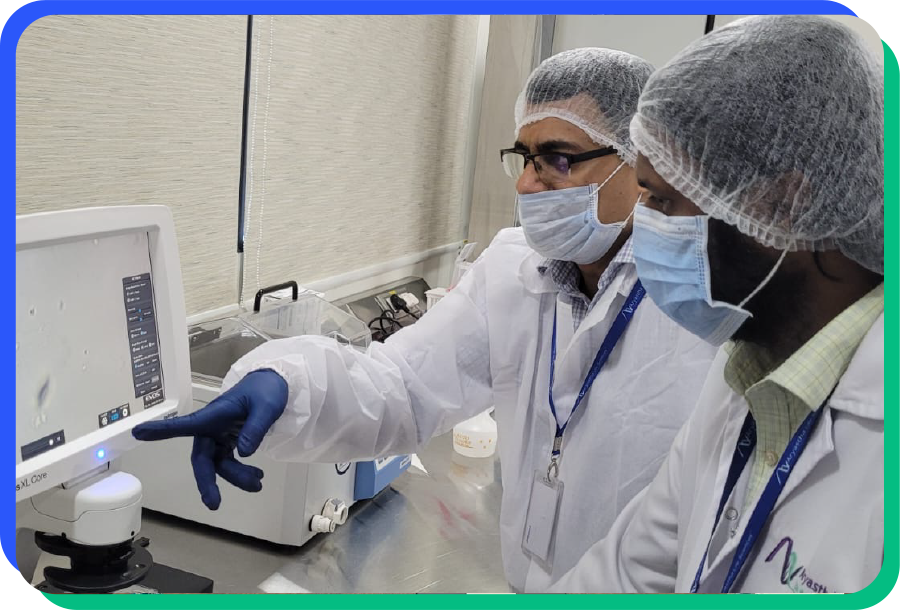
These cells are mainly derived from diseased tissues (rodents and humans). These cells provide more biologically relevant data than that established cell lines. At Aryastha, we have developed a faster way to generate primary cells of our interest, and these cells can be used in various applications, from basic research to drug discovery. These lines are combined with 3D cell culture technologies for better reagents/models to improve research. These cells are ethically sourced and authenticated by testing possible contamination and key disease-specific markers.
Here are disease indications of different species (mice and humans) for our primary cell’s capabilities. Tumor cells (Breast, Lungs, GBM, CRC, HNSCC, Ovarian, etc.), Immune Cells (microphases, dendritic cells), Heart, Liver, and Kidney Cells.
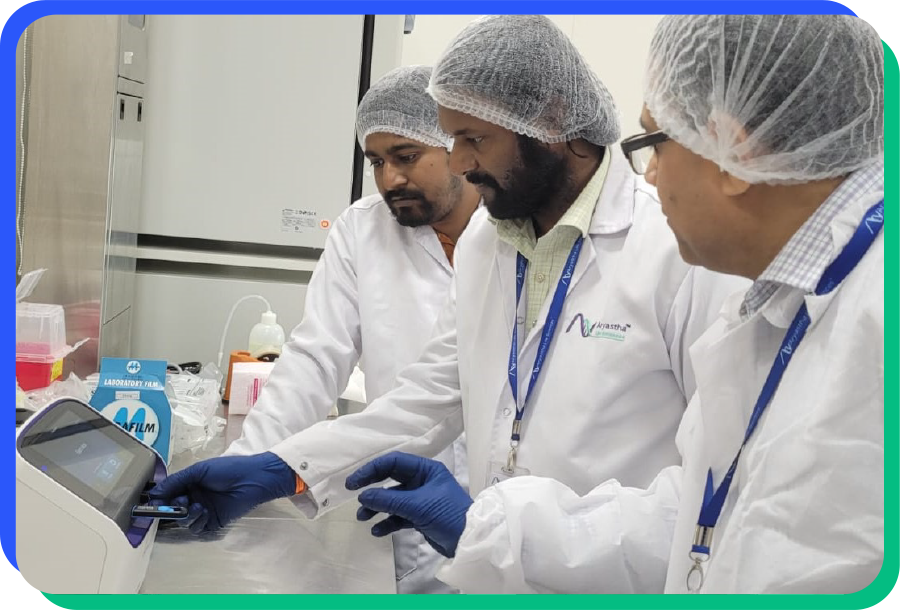
Target-based Screening Platforms
Kinase screening: HTRF, ADP Glo, IMAP, LANCE ULight TRFRET, NanoBRET
Epigenetic Proteins (BRD4, EZH2, HDAC, HMT): AlphaLISA, HTRF, FP
Other classes (ALDH2, NLRP3, ribozyme, enzymes in vitamin metabolism, gluco-corticoid receptor, carboxyl esterases, proteases, amidases, CBP (transcription co-activator): LC-MS/MS, TRFRET, NanoBRET, Colorimetric Readouts, western blot, qRTPCR, RNAi
cAMP detection by LANCE ultra or HTRF
Calcium flux by FLIPR
IP3 detection
ß-arrestin internalization
Protein phosphorylationReporter gene-based readout
Cellular Tag-lite binding
HiBiT Assay
Ternary Complex formation by Nano BRET and AlphaLISA
Determination of thermodynamics of interaction by SPR and BLI
Protein Ligand Interaction by TR-FRET, FP, AlphaLISA and Thermal Shift assay (TSA)
Kinetics of Prodrug dissociation by LC-MS/MS
Disease-based Screening Platforms
Cancer cell panel screening
Cell proliferation (CellTiter Glo)
Long-term incubation studies
3D culture assay
Apoptosis assay
Cell cycle analysis
Angiogenesis
Migration/invasion assay
Nuclear translocation assay
Target validation (shRNA, RNAi, Crispr-Cas9)
Characterization of cell/animal model (whole exome; RNAseq)
Cytokine/chemokine profiling
T cell activation/proliferation
MLR (i.e., human DC and T cells, mouse DC and T cells, etc.)
B cell activation
NK cell activation
ADCC
Co-culture (i.e., immune cells with tumor cells)
PBMC assays
Human whole blood assays
PD1/PD-L1 binding and cell-based assays
Checkpoint binding and cellular assay
Immune reporter cells or HEK293-derived reporter cells
Engineered cell line for CDX model study
Signal pathway assay (i.e., JAK/STAT pathway, Sting pathway, RIG-I, IL6, TGFβ, etc.)
Cytokine/chemokine profiling (XMAP- Platform)
Neutrophil Chemotaxis assay
Macrophage Polarization assay
GSIS (Intact islet/pancreatic beta cell)
Fatty acid synthesis assay
Fatty acid oxidation assay
TCA cycle assay
Glucose uptake
TG, glycogen, ketone body detection
In vitro Safety Pharmacology Screening
IC50 determination
Kinases: full-length or catalytic domain
Wild type and mutated versions
Multiple readouts (ADP-Glo, Lantha, etc.)
A single dose or dose response for EC50 and IC50 determination
Selected targets relevant to clinical adverse drug reactions (ADR)